



One of the biggest challenges business founders face when starting a company is opening and managing a U.S. business bank account. Navigating the requirements—such as lacking a U.S. Social Security number or a physical address in the country—can make the process even more confusing and frustrating.
Most banks require a valid passport for identification when opening a U.S. business bank account. There is no doubt that having a reliable way to send, receive, and safeguard funds in the U.S. is essential—using a personal bank account is a no-go!
Globalfy offers you this comprehensive guide to help you discover the best U.S. business bank options for foreign entrepreneurs, and how . We’ve done the legwork so you can focus on building your business with confidence.
Watch the video below and learn how to open an American bank account as a non-resident in 2025:
Introduction to U.S. business bank accounts
Banks in the U.S. offer a comprehensive suite of financial products and services designed specifically for companies operating in this market. For foreign company founders, understanding how the banking system works is essential for effectively managing business finances and ensuring smooth operations.
Before choosing where to bank, it helps to understand the three types of institutions you’ll come across. Commercial banks are the most common — they handle everyday checking and savings accounts for individuals and businesses alike, and are usually the right starting point. Investment banks, like Goldman Sachs or J.P. Morgan, work differently: they focus on capital markets, mergers and acquisitions, and raising funds for expansion, not day-to-day business banking, so they’re not what you’re looking for at this stage. Neobanks and fintechs sit in a third category — digital-first platforms that tend to be the most accessible option for non-residents, since they’re built around remote onboarding rather than in-person branch visits.
A U.S. business bank account is a critical tool for handling business expenses, maintaining healthy cash flow, and keeping finances separate from personal funds. While foreign entrepreneurs can open a U.S. business bank account, the process often involves additional documentation and requirements compared to U.S. residents.
Certain banks may ask for business plans during the application process for a new account, and navigating these steps is key to establishing a strong financial foundation for your U.S. business.
Benefits of a business bank account
Opening a business bank account provides a range of benefits that go far beyond simply having a place to store your company’s funds. By keeping your business finances separate from your personal accounts, you simplify bookkeeping, make tax time easier, and present a more professional image to clients and partners.
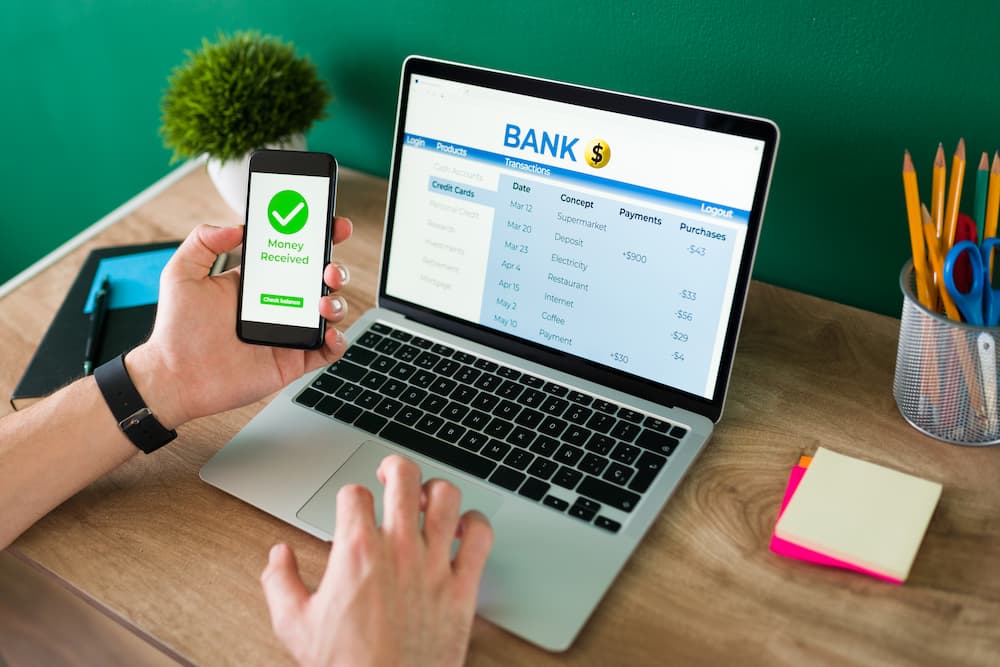
A U.S. business bank account also gives you access to essential banking services, including checking and savings accounts, debit cards, and robust online banking tools. For non-U.S. residents, having a U.S. business bank account is a powerful way to establish a presence in the U.S. market, receive payments from American customers, and manage international transactions with ease.
On top of that, U.S. banks and fintech partners are backed by a high-reputation banking system: the Federal Deposit Insurance Corporation (FDIC) protects deposits up to $250,000, the highest protected amount offered by any insurance agency in the world. U.S.-based transfers also tend to move faster and face less scrutiny than transfers routed through other countries’ banking systems, which is a meaningful advantage if you’re moving money internationally on a regular basis.
With the right business bank, you can take advantage of the world’s largest economies and position your company for growth.
Step by step guide to open a U.S. business bank account
This section walks you through the essential steps—starting with choosing the right bank—and outlines the key documents you’ll need to get started.
1. Choose a U.S. bank
For foreign company owners trying to open a bank account in the U.S., here’s the hard truth: not all banks will work with you. Some flat-out refuse unless you have a Social Security number, a U.S. address, or residency. That’s why picking the right bank matters. Also, you’ll want one that’s used to dealing with international customers and won’t make the process harder than it needs to be.
There are a few financial services, such as fintechs, that will let you open an account, even if you don’t live in the U.S. or have any residency documents. Since you’re running a business that’s registered in the U.S., they let you open business accounts online.
These fintechs come with several advantages for non-residents. You’ll need an EIN and a U.S. address in your name. These are digital-first platforms that offer no-fee banking and solid tools for managing business finances remotely.
2. Get your documents ready
To successfully open your U.S. bank account, you will need to present some documents virtually to pass banking compliance. Make sure you have your LLC approval documents, business address, means of identification and your Employer Identification Number (EIN) ready.
LLC registration documents
One of the first documents the bank will ask for is your LLC registration document. This is the official paperwork from the state where you formed your Limited Liability Company (LLC). It proves that your business legally exists.

The name of this document isn’t the same in every state. Depending on where you registered your LLC, it might be called the Articles of Organization, Certificate of Organization, or Certificate of Formation. But no matter the name, it’s essentially the same thing: proof that your LLC is registered and active.
You get this document when you file your LLC formation paperwork with the Secretary of State (or similar government office) in the state you choose. Once your filing is accepted, the state issues this approval document. Without it, your LLC doesn’t officially exist, and banks won’t move forward with the account opening.
Means of identification
When it comes to proving who you are, your passport is usually the way to go. It’s the most widely accepted form of ID, especially if you’re coming from another country. It tells people where you’re from and confirms your identity.

Your means of identification should be current and in good condition. Nearly every bank will ask for it, so have it ready. If you happen to have a U.S. ID, like a driver’s license or a state-issued ID, that can help too. It’s not required, but it can make the process easier, especially at larger banks. Some banks might ask for more than one form of ID, so if you’ve got both a passport and a U.S. ID, bring both.
Don’t worry if you don’t have a U.S. ID. Most non-residents don’t. Your passport alone is usually enough to start with, especially if you also have other supporting documents like a visa, an I-94 form, or a utility bill with your name and U.S. address on it.
U.S. business address and proof of foreign address
Another thing you’ll need to provide is proof of a U.S. business address. This can feel tricky if you don’t live in the US, but don’t worry, it’s manageable.
First, let’s talk about what kind of address is needed. You’ll be asked to provide a registered business address. This is usually the address of your registered agent, that is, the person or company officially listed to receive legal documents for your LLC. You can absolutely use this address when the bank asks for your “registered address.” Most non-residents go this route.
Next, there’s the trading address. This is where your business operates from. It can be in the US or outside the U.S. It could be your home, a coworking space, a small office, or even a shared shop or studio–proof of your trading address is required, usually a utility bill.
If you don’t have a US address for receiving mail or want more privacy, you can also buy a virtual U.S. business address. These services will receive your mail and forward it to you, which also works for most banks as proof of address.
Employer Identification Number (EIN)
Another document you will have to present is your EIN, which is also called your Federal Tax ID Number. It’s a must-have, not optional.
Some banks will let you simply type in the number during the application process. But many will ask for actual proof that the EIN is real and assigned to your LLC. That’s where things can get a little tricky if you’re not sure what counts as valid proof.
Here’s what works:
– SS-4 fax confirmation – This is the application you originally submitted to the IRS to get your EIN. If you applied by fax, the IRS might have written your EIN directly on the form and sent it back to you. That counts as proof.
– EIN Confirmation Letter (CP 575) – This is the official letter the IRS mails out after approving your EIN application. If you applied online or by fax and got approved, this is the gold standard.
– EIN Verification Letter (147C) – If you lost the CP 575 or never got one, you can request this by calling the IRS. They’ll mail or fax it to you, and banks accept it as proof, too.
U.S. phone number
Though not always necessary, having a U.S. phone number is important when opening a bank account as a foreign entrepreneur. Traditional banks expect one, and without it, your application could hit a roadblock—fintech companies, on the other hand, might accept an international phone number.
The good news is, you don’t need to move to the U.S. to get a U.S. number. Several services cater specifically to non-residents and offer U.S. numbers for customers online. These numbers work for calls, texts, and even two-factor authentication in many cases.
3. Open the account
Once you’ve got all your documents together, it’s time to open your business bank account. The process depends on the type of bank you choose, whether online or traditional, and each comes with its own steps and requirements.
If you’re going with an online banking like Mercury, Relay, or Wise, everything is done digitally. You’ll start by going to the bank’s website and filling out the application form. You’ll need to upload some key documents, including:
- Company formation papers
- EIN letter from the IRS
- Government-issued ID
- Document that proves you have a U.S. address—utility bill, lease, or bank statement
After that, you’ll go through identity verification. Some banks accept just a passport or a national ID, especially if you’re applying from outside the U.S. Once everything is submitted, approval can happen pretty quickly. It can be anywhere from a few hours to a few days, depending on the bank and how clean your paperwork is.
Form a U.S. company and let us help you open your business bank account

At Globalfy, we know how important it is not just to form your company in the U.S., but actually to run it like a real business. We’ve worked with thousands of entrepreneurs from around the world, and we know how frustrating it can be to get a bank account set up when you’re not physically in the States. So we make it easier.
When you form your LLC or Corporation with us, we don’t just stop at registration. We take you through the next steps: applying for your EIN, setting up your virtual address, and getting your post-formation documents in order.
Our platform is built to simplify everything. You can keep track of deadlines, compliance filings, and state renewals without having to chase down paperwork or figure out confusing regulations. And when it comes to banking, we offer real support. We’ll help you understand your options and assist with opening a business bank account for a non-resident.
We’ve bundled everything—company registration, bank account help and more—into a single streamlined experience to provide real support to help you build and grow your business in the U.S. Don’t waste time, open a U.S. business today and let us guide you on how to open a U.S. bank account.
Best U.S. business banks for non-resident owners
Let’s face it. Not all traditional U.S. banks will let you open an account , and most banks have strict requirements for non-residents. And even if they do, most will require that you are physically present in the U.S. to verify your identity.
However, some banks have started allowing remote processes under specific conditions, making it slightly easier for non-residents to open accounts. Chase Business Banking offers digital tools for managing international revenues through U.S. accounts but often requires a branch visit for account setup.
That is why the best option is to open a business account with US fintech banks such as Mercury, Silicon Valley Bank and Novo, with the rise of online banks making it more convenient for non-residents to open accounts remotely.
1. Mercury

Mercury is a U.S.-based fintech banking platform offering business accounts tailored for startups and small businesses, founded in 2017 in San Francisco. While not a traditional bank itself, Mercury partners with FDIC-insured banks (like Choice Financial Group and Column N.A.) to offer digital checking and savings accounts, corporate cards, and cash-management tools.
Mercury provides US account details, which are essential for receiving payments and managing business transactions. Mercury also integrates with popular accounting software for seamless bookkeeping.
Best for
Mercury is ideal for small business owners seeking digital banking solutions, as well as foreign-founded startups, especially those with US entities or U.S.-bound fundraising, seeking a streamlined, integration-rich banking solution. It excels with e-commerce, SaaS, and tech businesses that use platforms like Shopify, Stripe, PayPal, Xero, or QuickBooks. Mercury offers a modern, U.S.-compliant banking suite tailored to digital-first non-resident entrepreneurs.
Key Requirements to Open an Account
– U.S. Business Entity: You must have a U.S. company (like a Delaware C‑Corp or LLC). Mercury currently does not support individuals or foreign entity applications directly.
– Founders’ Identity Verification: Founders typically need to provide government-issued ID (such as a passport or U.S. driver’s license) and personal information to meet U.S. KYC/AML regulations.
– U.S. Address and EIN: A U.S.-registered address (can be virtual mail) is required, along with an Employer Identification Number (EIN) issued by the IRS.
– Compliance Review: Mercury performs standard banking compliance checks, including validating entity documents, ownership structure, and international risk protocols. The Beneficial Ownership rule also mandates that banks identify all natural persons who ultimately own the business before opening an account.
2. Lili
Lili is a U.S.-based fintech platform offering online business banking solutions for entrepreneurs who want to manage their U.S. business finances from anywhere in the world. Founded in 2018, Lili provides business checking, payments, invoicing, and savings tools through partnerships with FDIC-insured banks, delivering a secure and fully digital experience.
Lili enables foreign founders to open a U.S. business account 100% online, without requiring a Social Security Number. Through Globalfy’s platform, eligible clients can apply remotely and manage their U.S. business finances without being physically present in the United States.
Designed as an all-in-one money management platform, Lili combines banking, payments, and invoicing in a single dashboard. Founders can send and receive domestic and international payments, track expenses, and maintain full visibility and control over their business cash flow.
Best for
Lili is ideal for global entrepreneurs, single-member LLC owners, and small businesses that want a simple, modern U.S. business banking solution with strong international capabilities. It works particularly well for service providers, consultants, digital businesses, and founders who need to pay vendors or receive client payments across borders.
Lili is best suited for businesses that value online onboarding, global money movement, and integrated financial tools rather than complex startup or venture-banking features.
Key Requirements to Open an Account
– U.S. Business Entity: You must have a U.S.-registered business, such as an LLC or corporation, in good standing.
– Founder Identity Verification: Business owners are required to provide a valid government-issued ID, such as a passport, to meet U.S. KYC and AML requirements.
– EIN and U.S. Address: An Employer Identification Number (EIN) issued by the IRS and a U.S. business address are required. Virtual addresses may be accepted, depending on verification.
– U.S. Phone Number: A U.S. phone number is required for account setup, verification, and security authentication.
– Compliance Review: Lili performs standard compliance checks, including verification of business activity, ownership, and risk-based review prior to account approval.
Key features to consider
– 100% online U.S. business banking: Apply and manage your account remotely, without visiting the U.S.
– Global money movement: Send and receive domestic and international wire transfers to select countries, with transparent, flat fees.
– No foreign transaction fees: Use the Lili Visa® Debit Card worldwide without FX fees.
– All-in-one platform: Manage banking, payments, invoicing, and savings from a single dashboard.
– Human support: Access live customer support seven days a week.
3. Silicon Valley Bank

Silicon Valley Bank (SVB) is a commercial bank now operating as a specialist division of First Citizens Bank. Founded in 1983 in Santa Clara, California, it became the go-to financial partner for technology, life sciences, and fintech startups, especially those backed by venture capital.
Today, SVB continues providing tailored services, including digital checking and savings accounts, as well as business checking account options for startups. SVB also offers startup checking, venture debt, global trade finance, competitive currency exchange services for international businesses, foreign exchange, and cross-border payments to help innovative companies scale and expand overseas.
Best for
SVB is good at assisting companies incorporated in the U.S. (often in Delaware) without requiring a Social Security Number, which is a key benefit for non-residents looking to manage their U.S. operations from abroad. The bank supports cross-border operations with multi-currency accounts, international wires, and global trade finance across over 90 currencies and more than 110 countries.
Non-resident founders benefit from its remote account opening, fintech integrations, and founder-friendly policies.
Key Requirements to Open an Account
To open an SVB business account as a foreign founder, you typically need:
– U.S. Business Entity: Usually a Delaware LLC or C‑Corp, duly registered and in good standing.
– Company Documentation: Certificate of formation, operating agreement or bylaws, and proof of ownership structure.
– Founder Identification: Passport and a second ID; SSN not required, but an Individual Taxpayer Identification Number (ITIN) may be accepted if a Social Security Number is not available.
– Minimum Deposit: Some banks may require a minimum deposit to open a business account.
– Fund Source Explanation: Clear details on capital origins (e.g., investor funds).
– Plan and Deck: A concise business plan or pitch deck is often requested to verify the company’s model and funding.
4. Chase Business Banking

Chase Business Banking is a well-established banking solution that merges traditional in-branch services with advanced digital tools. Chase offers a range of checking account options for businesses, with monthly fee structures that vary by account type.
New customers may also qualify for generous sign-up bonuses. However, with higher overdraft fees, monthly account fees for lower balances, and restrictions on free cash deposits and in-person transactions, it’s geared more toward businesses that prioritize convenience, digital accessibility, and robust branch access.
Compared to a local bank, Chase may offer broader services and international accessibility, but local banks can be easier for non-residents to work with, especially when opening an LLC bank account.
Unfortunately, Chase will most likely require a visit to a branch to process your bank account application. While some banks may allow non-residents to start the application process online, they often still require an in-person visit to finalize it.
Bank of America is another major U.S. bank that provides similar business banking services, including checking account options and international accessibility for LLC owners and non-residents.
Best for
Chase Business Banking is well-suited for founders who are launching online-based or service-oriented businesses with cross-border needs, as using a personal account for business transactions is not recommended. Non-residents benefit from Chase’s digital banking tools, integration with payment processors via mobile card readers, and the ability to manage international client revenues through U.S. accounts.
Key Requirements to Open an Account
– Valid passport (primary form of identification)
– U.S. mailing address or registered agent’s address (a registered agent’s address obtained through a registered agent service is acceptable and serves as the official business address for LLC formation and compliance)
– Proof of address from your country of residence
– Employer Identification Number (EIN) from the IRS
– U.S. phone number (often required for verification)
– Business formation documents (e.g., Articles of Incorporation or Organization)
– Operating Agreement (for LLCs) or Corporate Bylaws (for Corporations)
– Initial deposit to fund the account (varies by account type)
5. Relay

Relay offers a U.S. business account for small businesses, providing clarity and control to manage cash flow, enforce team permissions, and secure funds with FDIC insurance up to $3 million. For international entrepreneurs, Wise Business is a popular alternative, offering borderless multi-currency accounts. Relay allows remote business banking for non-residents, requiring a valid passport and U.S. registered business.
Relay integrates with Wise accounts for efficient international payments and supports international wire transfers, making it convenient for global business owners. It provides up to 20 checking accounts, two savings accounts with 1–3% APY, physical and virtual debit cards, credit cards with cashback, and seamless bookkeeping integrations like QuickBooks and Xero without monthly or overdraft fees.
Best for
Relay is ideal for service professionals, especially new LLC owners setting up U.S. operations, who need U.S. banking infrastructure without being physically present. The company also accepts virtual business addresses tied to their U.S. LLC, making it perfect for founders based abroad setting up a remote U.S. subsidiary.
Key Requirements to Open an Account
To open an LLC bank account with Relay, you will need:
– Valid passport for every owner (ID requirement rejects national IDs).
– Physical U.S. address(es): one for the business and personal addresses (no PO boxes or virtual‑mail‑only).
– Beneficial owner info: passport or SSN, residential address, personal phone + email, business income source, annual income, status (new/established), and countries of operation (for non‑U.S. owners).
– Entity‑specific docs: Articles of Organization/Incorporation, EIN letter, operating agreement or bylaws, partnership agreement, DBA and relevant licenses.
– A U.S.‑registered business (LLC, C/S‑Corp, or partnership) with EIN
– Address verification via utility bill, lease, or government mail.
Essential considerations when opening a U.S. business bank account
Securing your U.S. business bank account implies some important aspects to keep in mind. The purpose is to have a seamless banking experience to let your business grow.
Initial deposit and minimum balance
When opening a US business bank account, non-US residents should be prepared to make an initial deposit, which varies depending on the bank and the type of business account you choose. Some US business banks require a minimum balance to be maintained in order to avoid monthly fees or to access certain account features.
These requirements can range from $0 to $5,000 or more, depending on the institution and the specific business bank account. It’s important for non-US residents to compare the initial deposit and minimum balance policies of different banks to find the best fit for their business needs and cash flow.
By understanding these requirements upfront, you can avoid unnecessary fees and ensure your US business bank account remains in good standing.
Business debit card and online banking
A business debit card is an essential tool for non-US residents managing a US business bank account. It allows you to make purchases, withdraw cash, and pay for business expenses directly from your business account, keeping your business finances organized and separate from personal spending.
Most US business banks also offer online banking services, enabling you to monitor your account, pay bills, and transfer funds from anywhere in the world. Many banks provide mobile banking apps for even greater convenience, so you can manage your US business bank account on the go.
With a business debit card and online banking, non-US residents can efficiently handle their US business finances, access banking services remotely, and keep their business running smoothly no matter where they are based.
International transfers and payments
For foreign entrepreneurs, the ability to send money and receive international transfers is a crucial feature of any U.S. business bank account. Whether you’re paying overseas suppliers or receiving payments from clients around the world, it’s important to understand the fees and exchange rates associated with international transfers.
Some U.S. business banks offer more favorable rates or lower fees for international payments, so it pays to shop around and compare your options. Additionally, specialized services like Wise or Payoneer can provide cost-effective solutions for international transfers, often with better exchange rates and lower fees than traditional banks.
By choosing the right business bank and transfer services, non-US residents can optimize their US business bank account for global transactions and keep costs under control.
How banking compliance works behind the scenes
Every bank and fintech you apply to is required to run compliance checks before approving your account — this isn’t optional, and it’s the same for every applicant, resident or not. In the US, banking institutions rely on FinCEN (the Financial Crimes Enforcement Network, a bureau of the Treasury Department) to share and review banking activity across institutions. This lets providers assess risk accurately and helps prevent money laundering and fraud across the system. Once your account is open, providers continue monitoring transactions on an ongoing basis, flagging anything unusual through mechanisms like Suspicious Activity Reports (SARs). None of this should slow you down if your documentation is in order — it’s simply the layer of scrutiny that keeps the US banking system trustworthy for everyone using it.
Which industries can — and can’t — open a U.S. business bank account
Not every type of business qualifies for a U.S. business bank account. Banking providers run compliance checks on the nature of your business before approving an application, so it’s worth confirming your industry is a fit before you invest time in the process.
Industries that typically work well:
Banking providers generally work with e-commerce and online services companies — including D2C and B2C brands, dropshipping, software, technology, marketing, and digital products — as well as technology service providers, freelancers, and other online service businesses. Founders in these sectors tend to have the smoothest path to approval, and often see real growth in income and business opportunities once they gain access to U.S. clients, providers, and services.
Industries that are typically declined:
To stay in compliance, most banking providers reject applications from the following sectors:
- Adult entertainment
- ATM operators
- Cryptocurrency or NFTs
- Currency exchange
- Debt collection or consolidation
- Decentralized Autonomous Organizations (DAOs)
- Direct market/telemarketing
- Gaming/gambling
- Money services businesses (MSB)
- Nutraceuticals
- Payday lenders
- Promotion of racism or bigotry
- Sale of weapons/firearms
- Sale or distribution of marijuana, cannabis, or CBD products
If your business falls into one of the accepted categories, you’re in a strong position to move forward. If it falls into a restricted one, it’s worth talking to a banking specialist early, since options narrow considerably.
Globalfy helps your register your business

At Globalfy, we help you register your business in the United States with everything you need in one place. We started in 2015 in Orlando, Florida, with a clear mission: to make it easier for international entrepreneurs to enter and succeed in the US market. Since then, we’ve worked with over 10,000 founders from over 100 countries, helping them build solid foundations for their businesses.
We focus on industries like technology, e-commerce, digital marketing, consulting, and education, sectors that thrive in a digital-first, global economy. As a multicultural team, we understand the hurdles non-residents face when launching in a new country.
That’s why our platform is built to remove friction at every step. Globalfy handles everything from LLC and Corporation formation to getting your EIN, providing a registered agent and virtual address, managing your business compliance calendar, and offering ongoing tax and accounting support.
We also help you open business accounts as a non-resident—a major step in launching your company. These business accounts are designed for easy access, management, and international transfers, making them ideal for global entrepreneurs.
We know banking compliance in the US can be complex, so we make sure you’re covered with expert guidance and the right tools. And if you’re exploring modern financial solutions, we break down the advantages of fintechs for non-residents so you can choose what fits your business best.
On top of that, we offer $200k in perks through our network of strategic partners and dedicated customer support that grows with you. We’re not just a service provider—we’re your launch partner.
Ready to take your business global?
Start your US company with Globalfy today.
Conclusion
Opening a US business bank account as a non-resident can be challenging, but it’s a crucial step for establishing and managing your company’s finances effectively. The banks we listed here support global founders and non-residents seeking to open a business bank account in the USA.
However, to be successful, you need to have your documents ready. Get your EIN, a valid business address, your articles of incorporation and your ID because you are going to need all these when opening the account. If you are yet to form your company, why not let the expert do it for you? Contact Globalfy today, and we will assist.
Frequently Asked Questions
Which bank is best for a business account in the USA?
The best business bank account depends on your needs—look for low fees, good online banking, strong customer Articles of Incorporation Filing Guide for New Founders service, and tailored business tools.
When comparing options, review business checking account features, monthly fees, and balance requirements to find the most cost-effective solution. Consider transaction limits, branch access, and integration with payment systems to choose the right fit for your business operations.
How to get a US business bank account?
To get a US business account, provide your business formation documents, EIN (Employer Identification Number), personal identification, and possibly an operating agreement. You’ll also need to visit a branch or apply online, depending on the bank’s process and your business type. Additionally, some banks may require a US phone number as part of the application process.
This process is specifically for obtaining a US business account, which is essential for non-residents and foreign entities looking to operate in the US.
Can I open a US bank account as a foreigner?
Yes, foreigners can open a US bank account, but requirements vary. For non-US residents, banks typically require a valid passport, proof of address, and an Individual Taxpayer Identification Number (ITIN) or Social Security Number (SSN). Some banks may also request business documents and require an in-person visit for identity verification.
What is an ACH transfer?
ACH stands for Automated Clearing House — it’s an electronic transfer between U.S. banks that lets you push money to, or withdraw money from, an account at another bank. It’s one of the most common ways businesses send and receive payments within the U.S.
Can I request a physical debit card?
Yes. Most business bank accounts come with both a digital and a physical card. If you’re only issued a digital card at first, you can usually request a physical one afterward.
Do I need to notify my bank before traveling internationally?
If your card is already approved for international purchases, you generally don’t need to do anything. If it isn’t, contact your bank before you travel to avoid having your card declined abroad.
Can I make international wire transfers with my U.S. business bank account?
Many business accounts support this directly, especially those with a foreign IBAN. Others don’t offer it natively, in which case a third-party service like Wise can handle sending or receiving international transfers.